Ingredients
Equipment
Method
Make the pastry shells
- Roll puff pastry into a 10x12 inch rectangle, then tightly roll it from the 10-inch side into a 10-inch long roll. Chill the roll in the freezer for 30 minutes until firm.
- Cut the chilled pastry roll into 12 equal disks, each about 35g. Work with 6 pieces at a time, keeping the rest chilled.
- On a lightly floured surface, roll each disk with the swirls facing up, into a flat disc about ¼ inch wider than the tart tin diameter and 3/16 inches thick. Use flour sparingly and lift with a pastry scraper to keep intact.
- Place each disc into a custard tart tin and press it to form a lip on the perimeter, preventing custard overflow. Work quickly, using flour if needed, and avoid overworking the dough.
- Freeze the prepared tart cups for at least 35 minutes or until frozen; they can be stored frozen for up to 2 weeks.
Make the custard filling
- Whisk heavy cream, sugar, whole milk, egg yolks, cornstarch, and vanilla extract in a small saucepan until sugar dissolves.
- Heat over medium-low heat, continuously whisking, until the mixture coats the pan sides and steam begins to form. Maintain patience and low heat.
- Once the custard is thick enough to coat a spoon, remove it from heat and continue whisking, scraping the sides, until it's no longer hot. Avoid overcooking into a pudding.
- Set aside to cool completely, covering the surface directly with plastic wrap to prevent a skin from forming.
Assembly and baking
- Preheat oven to 475°F (245°C) and place frozen pastry shells on a parchment-lined sheet pan.
- Quickly spoon cooled custard into each shell, filling to about 3/16 inches below the top of the pastry, ensuring the oven is ready to avoid the custard soaking into the pastry.
- Place the pan on the middle rack, immediately turning the oven down to 450°F (230°C). Bake for a total of 30 minutes, checking and rotating after 20 minutes for even browning.
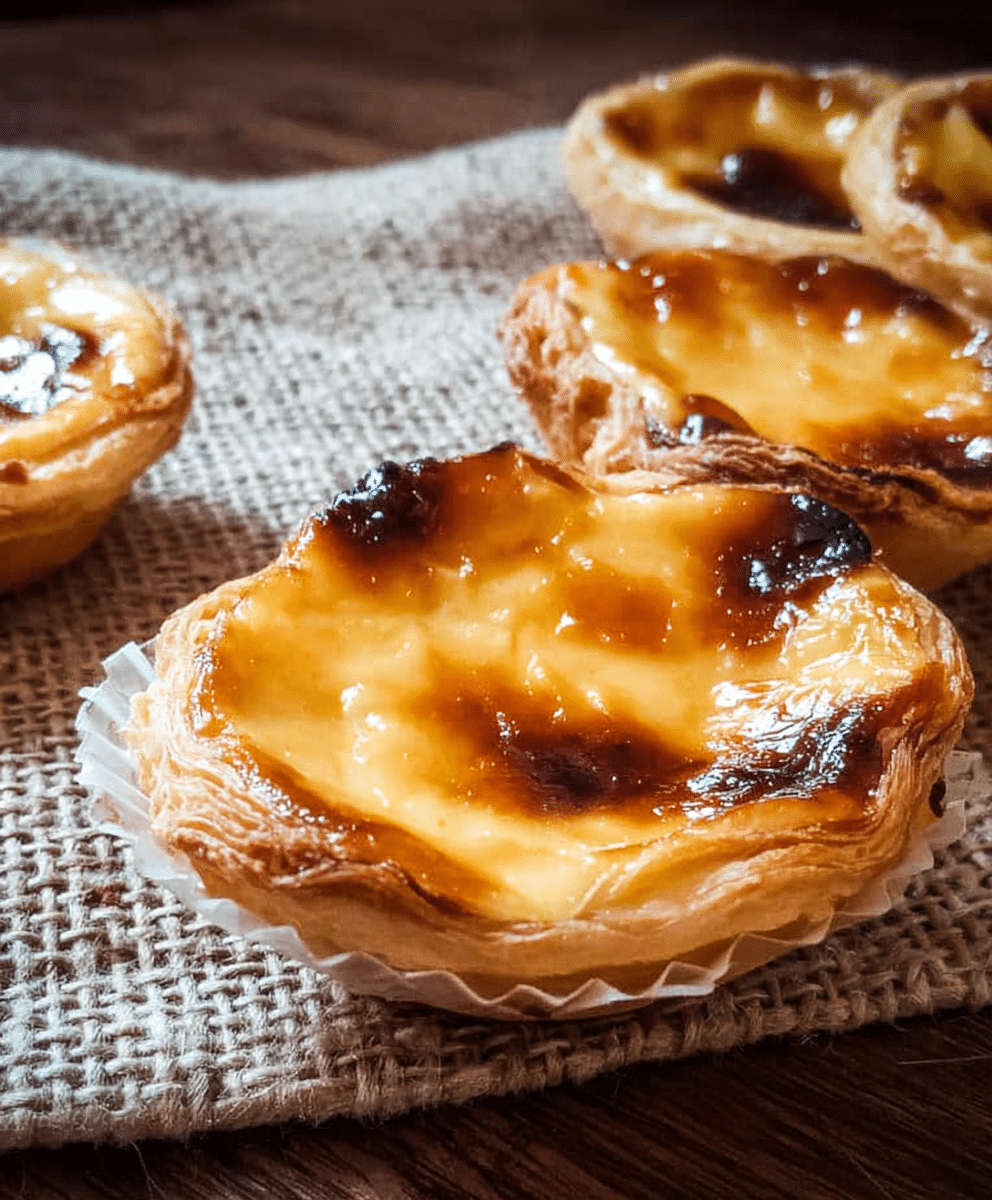
- After 25 minutes, if the pastry is golden brown with scorched bubbles, continue for 5 more minutes; if browning too fast, turn off the heat and let residual heat finish. Adjust baking based on your oven's accuracy.
- Once baked, remove the tarts in their tins from the oven and place them on a rack to cool.
- Allow tarts to cool before handling and removing from tins, then enjoy warm; reheat in a 350°F oven for 7-10 minutes if desired.
Notes
Form a lip on the tart tin to prevent custard overflow. Freeze prepared tart cups for at least 35 minutes, they can be stored frozen for up to 2 weeks. Cook custard on medium-low heat with patience, and do not overcook it into a pudding. Spoon custard into shells quickly, ensuring the oven is preheated to prevent soaking. Oven temperatures can vary, so adjust baking time and heat as needed for optimal browning. Allow tarts to cool before handling, as custard will be very hot. Reheat cooled tarts in a 350°F oven for 7-10 minutes.